Reminder: How to Deal With Coyotes in Urban Areas
Coyotes, once native to America’s western deserts and prairies, have established themselves as part of urban life in Southern California.
Drawn by abundant food and water sources, lack of predators and ample places for shelter, coyotes have made themselves quite comfortable in urban and suburban areas, including Leisure World.
Here are a few things to consider when dealing with coyotes in urban environments: 1. Take note of the season.
Though coyotes are active year-round, their activity varies throughout the year, influenced by mating season, breeding and territorial establishment. Coyotes may act more aggressively in July-September when their pups are born. During this season, individuals or animals who unknowingly get too close to a den may be seen as a threat, leading to defensive attacks by a coyote.
2. Don’t feed wildlife, and report those who do. Feeding wildlife is illegal in California and doing so can result in substantial fines. Coyotes are omnivores and opportunists, according to the USDA. Urban coyotes can feed on human garbage, pets, domestic pet food, garden food and birdseed. Coyote densities are generally higher when these food sources are abundant. Residents should remove bird feeders, bowls of pet food, fallen fruit and garbage from any location where a coyote might access it, including open patios.
3. Never let pets wander without a leash. Residents should never let their pets wander without a leash. Cats should always be kept indoors, and dogs should remain on a 6-foot leash whenever they are outside. Coyotes are generally nocturnal, so pet owners should be especially vigilant at night.
4. If a coyote gets close, practice hazing. Though coyotes are adaptable and comfortable in urban environments, they can be scared off with hazing techniques. There are many ways to haze a coyote—yelling, standing up straight, making loud noises, throwing rocks and sticks or using a whistle. All hazing techniques serve the same purpose: to instill a fear of humans. People should vary their hazing methods to ensure that coyotes don’t become accustomed to one technique.
5. Understand that options for eradication are limited. It is illegal to relocate coyotes in the State of California. Trapped coyotes must be euthanized. The Golden Rain Foundation successfully captured and euthanized coyotes in years past, but the snare traps used then were banned by the State of California. Attempts to capture coyotes in early 2024 using baited cage traps were unsuccessful, and the program was discontinued.
6. Report sightings. Coyote sights can be reported to the City of Seal Beach at https://www. sealbeachca.gov/City-Services/ Animal-Control or to GRF Security at 562-594-4754. Sightings and coyote-related incidents appear in the monthly Security report published in the LW Weekly.
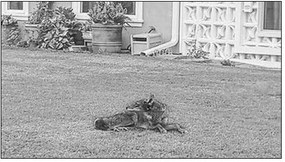
This coyote was photographed by resident Mike Banfield, who said it is being heralded as the mascot of Mutual 5.