Coyotes in Leisure World: An Overview
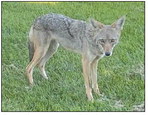
There has been a recent uptick of coyote sightings in Leisure World as coyote mating season begins. The sight of these wild animals elicits a range of emotions that ranges from wonder to fear.
This range of emotions was on display at the Jan. 30 community forum with GRF Executive Director David Norvell, who listened to resident concerns and questions about what, if anything, could be done to address the presence of the wild canines.
Can GRF trap the coyotes and relocate them?
The California Department of Fish and Wildlife enforces strict regulations governing how coyotes may be managed. While coyotes can legally be trapped, it is illegal to relocate them. Any captured coyotes must be euthanized.
Past trapping efforts in Leisure World have produced mixed results. In 2024, GRF hired All City Animal Trapping, which placed three traps on trust property. The traps, baited with chicken wings, failed to capture a single coyote.
Coyotes are highly sophisti-
cated, intelligent, and adaptable predators, exhibiting complex social structures, advanced communication, and remarkable problem-solving skills that allow them to thrive in diverse environments.
Earlier efforts proved more successful. In 2014, “gas chamber”-type traps captured three coyotes, which were euthanized through carbon dioxide asphyxiation in closed chambers. At the time, residents called the method inhumane. The American Veterinary Medical Association discourages euthanasia by asphyxiation except under the most controlled circumstances.
Ways to reduce coyote populations in Leisure World Coyotes can live in almost any habitat in California, from arid deserts in the south to wet meadows and foggy coastal regions in the north. Some of the highest population densities on record occur in suburban Southern California. Their presence is a fact of life in the region. One way to reduce their proximity to suburban areas is by reducing pet waste, food, and trash left outside, as well as water sources—all of which create the ideal environment for coyotes and their prey to flourish.
One resident at the Jan. 30 forum proposed installing additional fencing or physical barriers to prevent coyotes from entering the community. While this concern is understandable, wildlife experts note that coyotes are highly adaptable animals. They are capable of jumping or climbing fences up to 6 feet high, with some able to clear even higher barriers. They can also dig beneath fencing and pass through relatively small openings. Because of these behaviors, attempting to keep coyotes out of the community entirely is not considered feasible.
How to keep pets safe
It is important for residents to take extra precaution during mating season (January-March). That means supervising pets when they go outside, even in nearby and seemingly safe areas. Coyotes are generally reclusive but, in extreme circumstances, might see household dogs as threats or competition and attack. Cats should be kept indoors at all times.
Are humans at risk of coyote attacks?
There have been no reported incidents of coyotes attacking humans in Leisure World. Any and all incidents involving pets or humans should be reported to GRF Security by calling 562594-4754.
Coyote attacks on people are considered extremely rare. According to Urban Coyote Research, 142 attacks were reported nationwide from 19852006. If any resident comes across an approaching coyote, it is important to immediately use negative reinforcement, often called hazing.
It’s important to use a variety of different hazing tools so that coyotes don’t get used to redundant or single stimulus devices, sounds or actions.
Hazing techniques include:
• Yelling and waving your arms while approaching the coyote.
• Using noisemakers including voice, whistles, air horns, bells, “shaker” cans full of marbles or pennies, pots, lid or pie pans banged together.
• Using projectiles such as sticks, small rocks, cans, tennis balls or rubber balls.
The simplest method of hazing a coyote involves being loud and large—stand tall, wave arms and shout until the coyote retreats.
Reporting coyote sightings
Coyote sightings can be reported to GRF Security at 562-594-4754. Sightings are logged and published in GRF’s monthly security reports.
The presence of coyotes is expected to continue increasing through the summer. March and April mark denning season, when young pups begin exploring surrounding areas in search of food and territory.
Report Coyote Sightings to Security 562-594-4754

Some residents go to great lengths to protect their small pets from being preyed on by coyotes. This dog, Lola, sported aspiked anti-coyote vest during a 2023 walk in Leisure World.