Town Hall Recap-GRF Financial Overview and Health
by Ruth Osborn
Communications Director
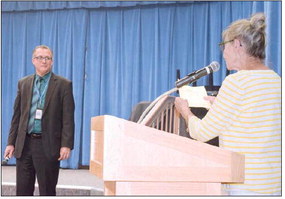
In a departure from previous town halls that were tightly orchestrated with limited backand- forth interaction, the GRF Board-sponsored town hall was a breath of fresh air, said several residents who attended the event in Clubhouse 4 on Aug. 28.
The topic of the day was “GRF Financial Overview and Financial Health,” presented by Interim Executive Director Dave Potter. Afterward, residents asked questions on credit cards, staffing levels, insurance, legal fees and more.
People got their rumors dispelled and information verified. No question went unanswered as part of the GRF Board’s revitalized commitment to foster community engagement and the transparent sharing of GRF operations.
More town halls are coming, and GRF President Linda Herman invites residents to send in their suggestions for future topics. People found Potter’s review of GRF finances interesting, easy to understand and comprehensive. He covered the basic framework of GRF funds: operating, capital and reserve; how the GRF spends money; the health of each fund and challenges faced; and the 2026 GRF budget timeline. Log on to lwsb.com and click “Livestream” to watch the town hall in its entirety.
An estimated 70 people attended and seemed engaged throughout; thoughtful questions followed the talk. People asked about:
• Validity of GRF financial statements: When asked if there was truth to rumors that GRF staff inappropriately used funds and credit cards, Potter replied no, that GRF pays a third party CPA firm to evaluate financials, and there was no evidence of any wrongdoing or impropriety. If people have questions about financials, they are invited to ask GRF staff about them. Residents are also welcome to review GRF financials through the resident portal at lwsb.com.
• Measuring viability of Leisure World’s aging infrastructure: The GRF Reserve study is biggest tool for that and adhering to the reserve study is the best way to ensure success. Delay will usually be more expensive; inflation will drive costs higher and recent fires in Pacific Palisades will like trigger higher costs for construction materials. Potter emphasized the importance of sticking with reserve study projections to maintain amenities.
• Overbudgeted amenity improvements: Sometimes overruns are impossible to foresee and, thus, inevitable, Potter said. But he agreed that there are instances where better foresight could provide improved outcomes, saying staff and vendors have been instructed to have a closer focus when scoping out projects.
• Department overruns and how they relate to overall budget performance: Potter acknowledged that having a budget line item in the red is not good, but every deficit needs to be evaluated in light of total budget performance. The GRF budget is currently in the black with four months remaining in the fiscal year, so GRF is well positioned to absorb some deficit. He also agreed that accurately gauging known expenses will help mitigate the inevitable unknowns that crop up, especially where Information Technology is concerned. That department, which is critical to GRF’s functionality and cybersecurity, manages constantly evolving technology and business demands, making it challenging to forecast exact expenses.