Channel cleanup removes potential mosquito habitat as West Nile cases rise
WEST NILE VIRUS
Removing sources of standing water helps prevent mosquito breeding
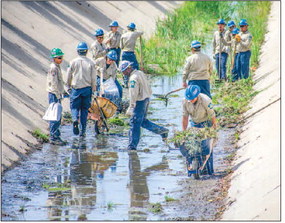
On Sept. 21, crews from the California Conservation Corps began a multi-day cleanup of the flood channel that runs along Golden Rain Road. Regular cleaning enhances the channel’s ability to deal with heavy water flows while reducing the standing water and vegetation that provide an ideal breeding environment for mosquitoes. Plants provide cool, shady spots for adult mosquitoes to escape the heat. When plants decay, they provide organic material and nutrients for mosquito larvae to feed on.
Reducing the opportunity for mosquitoes to proliferate is increasingly important as Southern California health agencies report a rise in cases of West Nile virus, a disease caused by the bites of infected mosquitoes.
On Sept. 21, the Los Angeles County Public Health Department said it had received reports of over 100 cases of West Nile virus infections so far this year, marking the highest number of cases seen this early in the mosquito season in nearly a decade.
“Of the cases reported this year, almost all have had severe illness,” the department wrote in a Sept. 21 press release. “This is expected because milder infections often go undiagnosed and are not usually reported.”
West Nile virus survives in nature in several types of birds and is transmitted by the bites of mosquitoes that feed on infected birds. The virus spreads during warm weather months when mosquitoes are most active. While not all mosquitoes carry this virus, the type of mosquito that spreads this virus is found throughout Orange and Los Angeles counties.
Although everyone is at risk for West Nile virus, people over 50 and those with health problems are at greater risk of serious illness, which can include meningitis (brain infection), encephalitis (swelling of the brain) and limb paralysis. There is no specific treatment for West Nile virus disease and no vaccine to prevent infection.
To reduce risk of contracting West Nile virus, people should:
• Wear mosquito repellent:
Mosquito repellents can prevent mosquito bites. EPA-registered repellents containing DEET, picaridin, IR3535, 2-undecanone, and oil of lemon eucalyptus are the longest lasting and most effective; several options are available at the GRF Purchasing Office. Wearing long-sleeved clothes and pants when outside can also help reduce bites.
• Keep mosquitoes out of your home: Make sure that doors and windows have tightfitting screens to keep out mosquitoes. Repair or replace screens with tears or holes.
• Prevent mosquito breeding: Eliminate standing water where mosquitoes can lay eggs. Clear standing water in flowerpots, saucers, birdbaths and other outdoor containers. Empty items that hold water inside and outside your home once a week. Mosquito eggs only need a thimbleful of water to hatch.
For more information about West Nile virus, visit www. ocvector.org.