Avoid overeating during the holiday season
HEALTHY EATING
As the temperatures drop and the madness of the holidays set in, it’s important to keep health objectives in sight. Along with the fun of Thanksgiving, Hannukah and Christmas, there are the dangers of excess food and stress. That may hold especially true as the nation continues to struggle with the COVID-19 pandemic.
Experts say the best way to combat holiday overload is to minimize stress, plan ahead and get plenty of rest. But how?
Keep Active: Increase fitness routines, especially in the days leading up to a big meal, such as Thanksgiving. Get exercise in during early afternoon hours, when there’s still plenty of sun and temperatures are more comfortable.
Hydrate, Hydrate, Hydrate:
While it’s tempting to reach for a hot cup of tea, coffee or spiced cider, don’t ignore the body’s need for water. According to the U.S. National Academies of Sciences, Engineering, and Medicine, an adequate daily fluid intake amounts to about 15.5 cups of fluids a day for men and 11.5 cups for women. And most of that should be water, consumed regularly over the course of the day. After all, between 40 percent and 70 percent of the human adult body is made up of H2O.
Don’t Skip Meals: Some people who are anticipating a large meal willforgoanearliermeal,thinkingit willallbalanceout.Butnutritionists say this is the wrong tactic to take. “When people skip meals, they feel like they’re owed something later in the day, so they tend to overeat at their next meal,” registered dietitian/nutritionist Bonnie Taub-DixtoldPreventionmagazine last year. “But if you split up your meals throughout the course of the day, your body is able to use those nutrients more efficiently.”
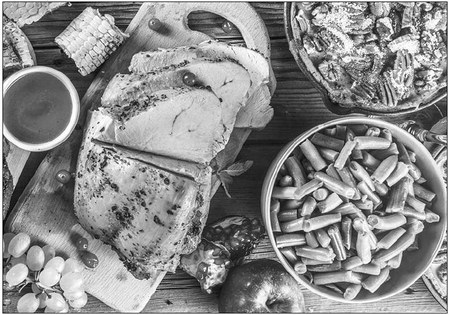
Trim Calories: Cut back on dishes sides heavy on sugar or fat, especially for those big holidays. Consider mashed sweet potatoes or even mashed cauliflower in place of mashed potatoes. Instead of the usual green bean casserole made with canned cream of mushroom soup, steam fresh green beans or stir-fry them in a little olive oil with a dash of salt and pepper. Fresh cranberry sauce is better than canned—and it’s packed with antioxidants!
Prioritize: Nutritionists recommend concentrating on lean proteins (like the white meat from turkey breasts) and making veggies the star of any meal. For special- occasion foods (i.e., richer, more calorie-laden dishes), take no more than what would fit in an ice cream scoop.
Eat Slowly: Studies published in the American Journal of Clinical Nutrition suggest chewing foods slowly and mindfully allows a body to release hormones in the gut and brain that tell a person they are full with less food and help them digest better. So savoring a meal makes it more satisfying. And by waiting just 10 minutes after clearing a plate, the need for second helpings decreases exponentially.
Don’t Dine Alone: If possible, enjoy meals with someone, whether in person or via Face-Time or Zoom. Socializing lifts spirits—and not so much forks.