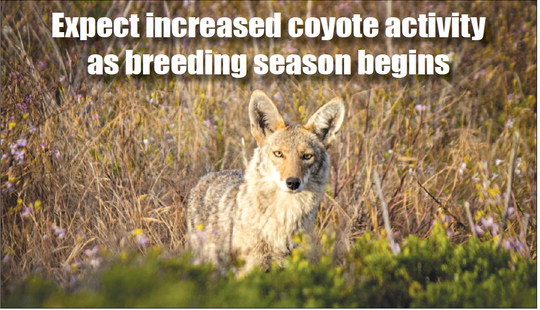
Expect increased coyote activity as breeding season begins
WILDLIFE BEHAVIOR
These wild canines will seek to establish territory and fi nd mates
Coyote breeding season starts in January and February. Leisure World residents may notice more coyotes in and around the community as they seek mates and attempt to establish territory.
Coyote pups are typically born in March or April, during which coyote activity remains high as new parents seek food and water for their young. Once pups mature, coyote behavior may appear more brazen as young coyotes venture out into the world for the first time.
These seasonal changes are normal and temporary, but a little preparation can go a long way in keeping both residents and wildlife safe.
Small pets can easily become coyote prey. Cats and small dogs should not be allowed outside alone, even in a fenced yard. It is highly recommended that owners always accompany small pets. Though coyotes generally hunt between sunset and sunrise, they can be observed at all hours of the day and will not pass up the opportunity for an easy meal. A dog or cat left outside can be taken in a matter of moments.
While coyote encounters with people are rare, residents are encouraged to take simple steps to reduce the likelihood of close interactions:
• Gather up fallen fruit promptly.
• Keep trash off of porch areas.
• Keep cats indoors whenever possible. Never leave small pets unattended outdoors, especially at dawn or dusk.
• Walk dogs on leashes no longer than 6 feet.
• Do not feed coyotes—intentionally or unintentionally, and avoid leaving pet food outdoors.
• Clean up spilled birdseed, which attracts rodents that coyotes hunt.
GRF policy requires dogs to be leashed and under the control of the pet owner at all times on Trust streets. The leash should be no longer than 6 feet.
Stock Image
What to Do If You Encounter a Coyote
• If you see a coyote nearby, remain calm and confident. Do not run.
• Stand tall and make yourself look larger.
• Wave your arms and speak firmly: “Go away, coyote.”
• Use noise (a whistle, air horn, or clapping) to reinforce their natural fear of humans. This technique, known as hazing, helps coyotes maintain a healthy distance from people.
If there is an immediate emergency or a person is being threatened, call 911 right away.
For non-emergency concerns or aggressive behavior, residents should contact the Security Department at 562594-4754, available 24 hours a day.
Residents can call to report sightings, which are logged by the department.