Committee will consider fixes for failing pedestrian gates
OPERATIONS COMMITTEE
by Emma DiMaggio
Communications Manager
The GRF Operations Committee is set to review two proposals to replace the community’s aging pedestrian gate system at its Oct. 6 meeting. The current setup, which relies on outdated magnetic pattern card readers, has become increasingly unreliable and raises significant security concerns, according to a staff report.
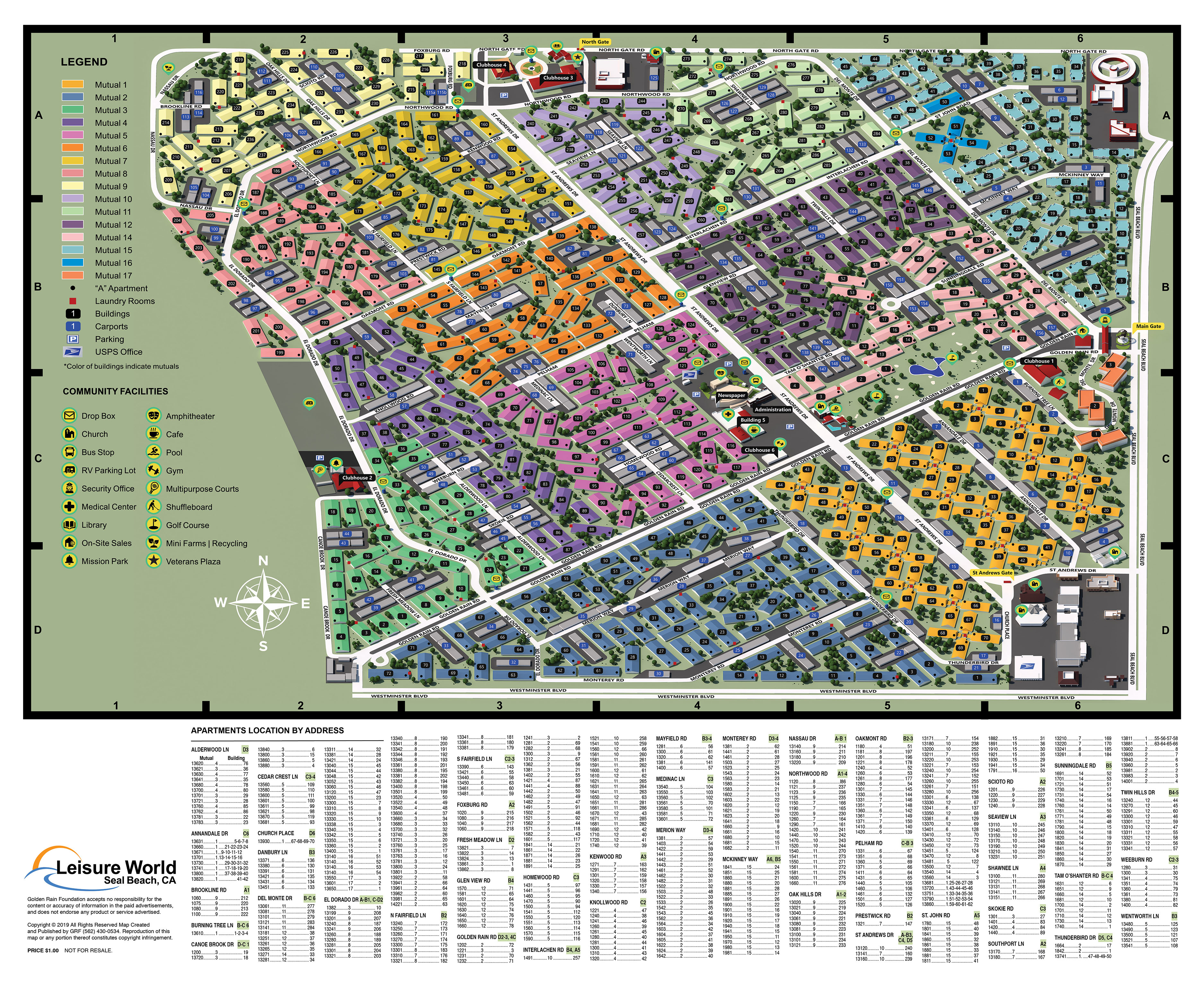
Maintenance workers are now performing daily patchwork repairs just to keep the six gates—North Gate, Mary’s Gate, Main Gate, Jim’s Gate, St. Andrews Gate and Church Gate—in operation. The company that manufactured the existing card readers is no longer in business. There is no product support, spare parts have been exhausted and the system lacks modern safeguards. Cards can be easily copied or “spoofed,” and there’s no way to disable lost or stolen IDs, leaving gaps in community security.
The cards currently being issued do not reliably work at the gates, and will not work with any new or future card access system. GRF cannot issue these cards indefinitely, nor can it stop issuing them until the GRF Board decides on a new system. Once a proposal is approved, the GRF will purchase and distribute new cards that will work with the new system.
The IT Department has presented two replacement options for consideration by the committee. Both would involve issuing new ID cards and updating infrastructure, but they differ significantly in cost and scope.
Option 1: Full Scope Replacement with Security Enhancements The first and more comprehensive proposal includes modernizing gate access to integrate with Leisure World’s existing Proptia system, which manages vehicle gate access. New ID cards would contain updated, encrypted chips with unique identifiers, which can be disabled
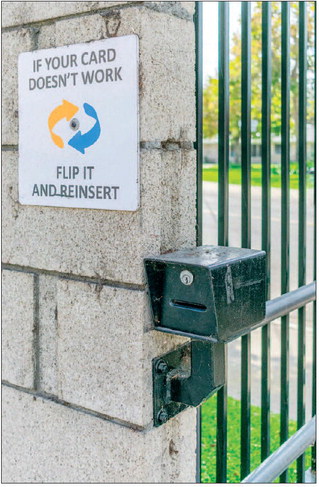
Service Maintenance employees regularly repair the community's pedestrian gates with makeshift solutions, since the outdated card readers are no longer manufactured or supported.
Paul Kryczko if a card is lost or stolen.
This proposal is scalable, according to a staff report. For example, in the future, residents could use their smartphones to open gates. GRF could also choose to expand the use of these access cards to amenities like the RV Lot, Aquatic Center, Fitness Center and clubhouses. The higher cost of this project is mainly driven by the need for additional infrastructure to support the modern card reading system and accompanying security features.
Additional features include:
• Fiber optic and wireless infrastructure upgrades, expected to save $2,400 annually in internet costs.
• Intercom systems to connect pedestrians with security personnel.
• Surveillance cameras at each pedestrian gate.
This plan would cost about $513,521, including a 10% contingency. It would be funded 40% from reserve funds and 60% from capital funds.
Option 2: Minimum Scope Gate Access Replacement A less expensive alternative focuses strictly on ensuring the gates function reliably. It removes the advanced features like mobile phone access, intercoms and cameras, but still updates the technology to a chip-based card system.
The estimated cost for this version is $304,694.50, also including a 10% contingency. This would consist of 68% from Reserve funds and 32% from Capital funds resulting in a lower overall expenditure, but, with reduced functionality.
Regardless of which proposal moves forward, two fixed expenses are included in both plans:
• $90,000 for 12,000 replacement access cards.
• $90,000 for four weeks of temporary staffing and equipment rentals to input resident data and bring the new system online.
Committee members have previously debated whether volunteer labor could offset some of those staffing costs, but no formal decision has been made.
Alternative options, such as standard keys or keypads accessible by a numerical code, have been rejected because they are not secure due to the potential for code-sharing and key copying.
The Operations Committee will discuss the proposals during the Oct. 6 meeting, held in Conference Room A at 10. Final approval, however, will rest with the GRF Board before any project begins. A town hall on the subject will be held soon.
There are six pedestrian gates in Leisure World.